


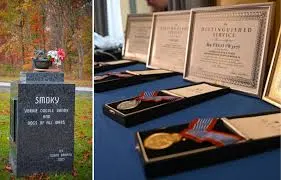
War Dog Pacific Theater Distinguished Service Medal
The account of the war dog Pacific Theater Distinguished Service Medal winners can be viewed as one of the most moving pages in the history of World War II. These half-breeds on four legs fought side by side with their human counterparts in savage Pacific battles, scouting out enemy positions, search and rescue wounded comrades as well as deliver essential messages through dangerous battle-fields. Medals and commendations are used to recognize these hero dogs as they have made exceptional contributions to the Allied victory and saved a lot of lives.
Programs at the War Dog Pacific Theater are known as Origins of War Dog Pacific Theater Distinguished Service Medal Programs.
The Pacific Theater Distinguished Service Medal recognition system of the war dog was the result of the Dogs for Defense program that was created in America in 1942 when the military discovered the opportunities of trained dogs to be used in military operations. The skills that were specific were necessitated as the Pacific campaign intensified. War dogs might smell enemy ambush, concealed bunker, be able to notify soldiers about booby traps, and offer psychological relief to soldiers suffering through the atrocities of the jungle warfare.


There were early doubts regarding the use of dogs in warfare which were soon overcome when the candidates of the war dog Pacific Theater Distinguished Service Medal proved their outstanding skills in combat. Military planners knew that dogs had much better sensory abilities than humans, they can not only smell, hear, and see things they otherwise could not. The extreme environment of combat in Pacific Theater made the war dog Pacific theater Distinguished Service Medal holders invaluable to the infantry units.
In the United States, training centers trained thousands of dogs to work in the Pacific though only the most outstanding ones would eventually be promoted as war dog Pacific Theater Distinguished Service Medal nominees. The dogs were trained to stay cool when fired upon by the artillery, to identify trip wires, to find the wounded soldiers and deliver messages in enemy country.
War Dog Pacific Theater Recipients of Famous Service Medal of Distinguished Service.
The German Shepherd-Collie-Husky mix, Chips, one of the most honored war dog Pacific Theatre Distinguished Service Medal recipients, was stationed with the 3 rd Inf Division. Although Chips was mainly present in the European and North African theatres, his fame led to the creation of the model of the awarding of war dog Pacific Theater Distinguished Service Medal applicants. Before controversy that surrounded the awarding of military medals to animals, Chips was awarded the Distinguished Service Cross, Silver Star and Purple Heart.
The most famous story of war dog Pacific Theater Distinguished Service Medal is the story of the Doberman Pinschers of the United States Marine Corps. These were distinguished dogs which fought all over the Solomon Islands, Guam and Okinawa and other battle fields in the Pacific. In the Battle of Guam where they would act as sentries, messengers and scouts, twenty-five Dobermans lost their lives. Their combined sacrifice put in place the fact that war dog Pacific Theater Distinguished Service Medal honors are a true signifier of heroism.
Candidates of individual war dog Pacific Theater Distinguished Service Medal such as Kurt who was a Doberman who served on Bougainville were incredibly courageous. Kurt, however, despite his severely wounded condition, alerted his unit against approaching Japanese soldiers, and got many Marines off ambush. Word of war dog Pacific Theater Distinguished Service Medal winners such as Kurt spread across the Pacific and helped boost morale, as well as remind the handlers of the special relationship they shared with their canine companions.


War Dog Pacific Theater Distinguished Service Medal Candidates- Combat Roles.
Valuable combat tasks were made by the war dog Pacific Theater Distinguished Service Medal medal awardees. The use of sentry dogs at night was to protect perimeters at the time when Japanese tactics of infiltration were most efficient. These war dog Pacific Theater Distinguished Service Medal candidates had the capability of sniffing the direction of enemy soldiers in the American positions giving them early warnings before they could suddenly ambush their positions. Their sense of smell and hearing were very sharp, and they sensed danger much earlier than the human sentry.
The other type of war dog that participated in the Pacific Theater Distinguished Service Medal is the scout dogs. These dogs were used in the head of patrols giving the handlers of these dogs alerts on enemy ambushes, booby traps, and concealed positions. Pacific Theater Distinguished Service Medal war dog scouts worked on silent missions and trained signals were used to warn about the presence without drawing the attention of the enemy troops. Numerous infantry formations were unwilling to do patrols without their war dog Pacific Theater Distinguished Service Medal scout dogs.
Messenger dogs were given a war dog Pacific Theater Distinguished Service Medal, which is awarded for upholding communications in case of radio failure or where silence was critical. Such pacifist war dogs Pacific Theater Distinguished Service Medal messengers dogs were able to work through artillery salvages, minefields, and areas unreachable by human beings to deliver essential messages that synchronized war efforts.
The Hero Official Magazine The Hero School of Veterans Handler-Dog Bond Behind War Dog Pacific Theater Distinguished Service Medal Stories.
The association between military service men and their war dog Pacific Theater Distinguished Service Medal dogs summed up one of the most serious bond of the military service. The dog handlers took months of training with particular dogs building systems of communication based on nuances and mutual trust. This relationship was critical to the success of war dog Pacific Theater Distinguished Service Medal because dogs were loyal and devoted to their trainers beyond the level of training.
Fighting strengthened friendship ties between war dog Pacific Theater Distinguished Service Medal teams. The common threat, interdependence, and a constant presence formed relationships that were termed as imitable by the handlers. Numerous Pacific theater Distinguished Service Medal holders of the war dog handler were known to have their canine companions save their lives several times over when they were on the Pacific campaigns. The psychological effect of losing a war dog Pacific Theater Distinguished Service Medal partner to the enemy decimation destroyed those who had the war dogs as much as any other human comrade.
Reunions between handlers and their war dog Pacific Theater Distinguished Service Medal partners after the war demonstrated how intense these relationships were. Large numbers of handlers advocated to keep their canine partners upon their discharge from the military, but initially military rules did not allow it. After a long time, the recipients of successful war dog Pacific Theater Distinguished Service Medals could come home with their handlers knowing that it was not worth causing these bonded pairs to suffer any more than necessary.
Medical Care of Recipients of Distinguished Service Medal Pacific Theater War Distinguished Service Medal.
The health care of war dog Pacific Theater Distinguished Service Medal candidates had to be supported with a lot of veterinary care during Pacific campaigns. The veterinarians of the military took care of the tropical illnesses, battle injuries, heat fatigue, and parasitism which jeopardized canine performance. Medical care available to war dog Pacific theater Distinguished Service Medal recipients was equal to those available to human soldiers due to their perceived importance to war efforts.
War dog Pacific Theater Distinguished service Medal combat injuries varied between shrapnel injuries to the gunshot wounds sustained in a fight against the enemy. Field hospitals were developed by veterinary teams and wounded war dog Pacific Theater Distinguished Service Medal candidates were treated immediately. The quality of medical care was seen by many dogs who went back to service after having severe injuries.
Preventive medicine was important in ensuring war dog Pacific Theater Distinguished Service Medal was operationally ready. War dog Pacific Theater Distinguished Service Medal units managed to stay at their peak through vaccination programs, parasite control, and nutritional control. The war dog Pacific Theater Distinguished Service Medal medical protocols had an impact on the veterinary practice in the post-war period.
Musings and Medals War Dog Pacific Theater Distinguished Service Medal Heroes.
Formal recognition of the war dog Pacific Theater Distinguished Service Medals recipients developed during World War II as military leadership recognized efforts of the canine. Although there were early arguments against military medals on animals, the sheer heroism of war dog Pacific Theater Distinguished Service Medal candidates finally prevailed over such arguments. Distinguished Service Medal of outstanding war dog Pacific Theater Distinguished Service Medal service was acknowledged by different commendations, certificates and medals.
The most prevalent award of equivalents of the war dog Pacific Theater Distinguished Service Medal became the Dickin Medal of British charity PDSA. This was a decoration commonly referred to as the animals Victoria cross in recognition of extraordinary service to duty in animals in warfare. Through this program, multiple candidates of a war dog Pacific Theater Distinguished Service Medal were awarded the recognition of their heroism and their comrades in arms, the decorated human soldiers.
Later, American military officials provided mechanisms of formally accepting war dog Pacific Theatre Distinguished Service Medal winners by unit mentions, performance certificates, and commemoration dedication. The memorials were post-war monuments honoring the war dog Pacific Theater Distinguished Service Medal holders who lost their lives in fights in the Pacific to make sure that the future generation would not forget what they went through.

The recipients of war dog Pacific theater distinguished service medal are known as Legacy of War Dog Pacific Theater Distinguished Service Medal.
The heritage of war dog Pacific Theater Distinguished Service Medal awardees lies long after the World War II and has laid the foundations that still serve as the guidelines to the current military working dog programs. The acknowledgment that well trained and well-kept dogs would be able to carry out missions which were not feasible by humans singlehandedly transformed the thought about the use of animals to aid military in their combat missions.
Contemporary military working dog programs are directly related to war dog Pacific Theater Distinguished Service Medal programs that were created in World War II. The methods used by current detection dogs, patrol dogs, and specialized working dogs are refined during the use of the war dog Pacific Theater Distinguished Service Medal. The training, medical and handler relationship standards set by the war dog Pacific Theater Distinguished Service Medal programs are still shaping the use of canine assets by modern militaries.
War dog Pacific Theater Distinguished Service Medal stories are also preserved in educational programs and museums, so that the new generations are aware of the contribution of these animals. Their sacrifice is kept in the minds of the population through documentaries, books, and memorial sites in honor of the war dog Pacific Theatre Distinguished Service Medal holders.
The service of Modern Remembrance of War Dog Pacific Theater Distinguished Service Medal is also known by the name of its service.
Modern attempts to revere the war dog Pacific Theater Distinguished Service Medal recipients have been exerted as historians write about their contributions. Military working dog heritage organizations actively exploit research on war dog Pacific Theater Distinguished Service Medal winners and gather photos, testimony of handlers, and military records. Such preservation activities are done to keep war dog Pacific Theater Distinguished Service Medal stories available.
War dog Pacific Theater Distinguished Service Medal recipients that served in World War II are commemorated annually at military installations and in war dog memorials. Veterans organizations are growing to incorporate the war dog Pacific Theater Distinguished Service Medal recognition of the ceremony since they realize these canine warriors merit the same honor as their human brothers.
Specifically, the monuments of the United States War Dogs Memorial and other monuments commemorate the winners of the war dog Pacific Theater Distinguished Service Medals and other working military dogs. These memorials contain the inscriptions and sculptures and plaques of separate war dog Pacific Theater Distinguished Service Medal heroes. The handlers, veterans, and dog lovers all come together during dedication ceremonies to honor the legacy of war dog Pacific Theater Distinguished Service Medal.
Dismissal: War Dog Pacific Theater Distinguished Service Medal Heroes.
The account of war dog Pacific Theater Distinguished Service Medal winners helps us to remember that heroism comes in a lot of different forms and that courage has no species barriers. The remarkable animals were put into service in some of the most difficult campaigns of the World War II with their outstanding skills and absolutely devoted service, saving millions of lives. Their sacrifice is also fitting to be recognized by war dog Pacific Theater Distinguished Service Medal, which helps to recognize the strong impression they had on military operations.