


Coastwatchers Pacific War
The operations of the Coastwatchers Pacific War are considered one of the most outstanding intelligence networks in world war II when the common people and military members changed themselves into eyes and ears of the Allies forces in the South Pacific. These courageous people worked behind the enemy lines on the islands occupied by Japanese and delivered invaluable information which saved thousands of lives and predetermined key battles. The history of the struggle of the Coastwatchers Pacific War efforts that reversed the tide of battle is one of the most interesting stories in history of gallantry and resourcefulness in the face of impossible odds.
History of the Pacific war Network of the Coastwatchers.


Coastwatchers Pacific War was an organization based on pre-war Australian naval planning which predicted Japanese growth across the Pacific region. In the 1920s and 1930s, the Royal Australian Navy realized that the dispersed islands in Melanesia and the Solomon Islands were strategically vulnerable. The Australian naval officer Lieutenant commander, Eric Feldt, came up with a concept of setting up observation posts on remote islands as a means of giving early warning to enemy naval movements.
It was under the name Ferdinand Organization, inspired after the story of Ferdinand the Bull, that the Coastwatchers Pacific War network officially organized with the codename of the group being the Ferdinand Organization. This ideology was in essence the principle of the Coastwatcher activities: monitor and report but not fight. When Japan entered World War II, some 800 Coastwatchers Pacific War volunteers had been recruited and prepared with teleradios, codebooks, and basic supplies all over the Pacific islands.
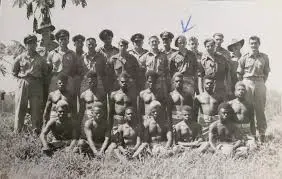
The Pacific War Coastwatchers recruiting was over a variety of backgrounds such as plantation owners, colonial administrators, missionaries, traders and native islanders with years of experience of local geography and circumstances. These people knew that they could become isolated, be in constant danger and face probable death in case they were found by the Japanese forces. The volunteers in the Coastwatchers pacific war were given only basic training and as much responsibilities as they could in assembling and relaying intelligence that could affect major military operations.
Setting up the Coastwatchers Pacific War Intelligence System.
The technical foundation of the operations of Coastwatchers Pacific War was relying on Teleradio sets, heavy gear and needed frequent re-arrangement to avoid Japanese direction-finding operation. The communication between each of the Coastwatchers Pacific War stations and the headquarters at Townsville, Australia was by encrypted codes that were changed on a periodic basis. The intelligence collected by the Coastwatchers Pacific War observers was the movements of the enemy ships, the number of aircrafts and their routes, the concentration of troops, and the activities of the naval bases.
The Coastwatchers Pacific War communications had been developed under specific measures developed to create the best security and delivery of intelligence in a timely manner. Operators sent within designated time slots, made use of short-coded messages and their transmitting points were often shifted. The Coastwatchers Pacific War network came up with standardized reporting formats that enabled the headquarters to make immediate assessment of threats and release information to the Allied combat units. This methodical use of observations turned incoherent observations into action oriented military intelligence.
The Pacific War in Guadalcanal Role of Coastwatchers.
The battle of Guadalcanal demonstrated how the Coastwatchers Pacific War network was invaluably useful to the Allied success. One of the early warning systems that saved Henderson Field in August 1942 when American Marines landed on Guadalcanal was the information given by Coastwatchers Pacific War operatives. On islands all over the chain of Solomons, these observers followed the formations of Japanese bombers as they left Rabaul and passed radio warnings which gave the American fighters a few precious minutes to scramble and intercept.
Among the most renowned heroes of the Pacific war was the Coastwatcher Paul Mason who worked in the south of Bougainville where he was in position keeping an eye on the Japanese air bases. The reports made by Mason included regular early warning of air attacks on the direction of Guadalcanal, usually warning the Allied forces by some two hours. A second legendary Coastwatchers Pacific War agent, Jack Read, operated in the Northern Bougainville, and with Mason developed an invincible screen of intelligence. The direct result of their Coastwatchers Pacific War campaign was the aerial defense which provided the security of Henderson Field in the fateful early months of the Guadalcanal campaign.
The intelligence service of the coast watchers Pacific war was also useful in naval operation around Guadalcanal. News of Japanese naval marriages enabled the American commanders to have forces in place to engage in the numerous naval battles that were to take place in what came to be known as the Iron Bottom Sound. Although not all encounters resulted in the Allies winning, the intelligence offered by the Coastwatchers Pacific War operatives, nullified the aspect of surprise that the Japanese forces used all over the Pacific conquests up until that point in time.
Famous Pacific War Coastwatchers Rescue Missions.
Other than intelligence collection, Coastwatchers Pacific War personnel had often engaged in dramatic rescue missions that rescued Allied aircrew and survivors of shipwrecks. The greatest rescue was on future American President John F. Kennedy whose PT boat had been sunk by a Japanese destroyer in August 1943. Operatives of Coastwatchers Pacific War Reg Evans and Arthur Reginald Evans organized the rescue of Kennedy after employing local scouts to identify the survivors and evacuate them.
The Kennedy rescue revealed the ways in which the work of Coastwatchers Pacific Wars made the local people a part of the intelligence networks. The local islanders were essential contributors, who acted as scouts, carriers, guides, and messengers of Pacific War stations of Coastwatchers. These indigenous allies faced the possibility of cruel Japanese retaliations by aiding Allied individuals, but thousands of them were involved in the Coastwatchers Pacific War operations in the Solomon Islands and New Guinea. Their familiarity with land, their capability to move without detection and their cultural awareness made them invaluable to the success of Coastwatchers Pacific War.
Hundreds of downed aviators who would otherwise have been captured, tortured or killed were saved through the rescue operations of Coastwatchers Pacific War. Every victory in the rescue saved Allied morale and deprived Japan of potential valuable intelligence. The reputation of the coastwatchers Pacific War to leave no downed airmen behind was a motivating factor to pilots to take more risks as they were aware of the network of dedicated rescuers who worked behind enemy lines and that was all over the combat zones.


Life and Problems of the Pacific War Operatives of Coastwatchers.
The actualities of the Coastwatchers Pacific War service included being always in danger, lonely, and physically challenged. Operatives generally stayed in jungles in deep hideouts and changed camps often so as to evade Japanese patrols that had direction finding devices. Inadequate medical care resulted in the people of Coastwatchers Pacific War suffering tropical diseases such as malaria, dengue fever, dysentery and parasitic infections. Food was made of whatever could be scrounged up of the jungle plants, and was made available on the infrequent drops of supplies when the conditions were favourable.
The psychological demands put on the Pacific War operators of Coastwatchers were as difficult as the physical ones. Months of seclusion, fear of being found out and knowing that being caught was to be tortured and hung brought massive stress. A few of the coastwatchers Pacific war stations had served more than two years in the enemy lines, and, patiently kept their lonely watch, as the tide of the war slowly turned. The psychological stamina necessary to the service of Coastwatchers Pacific War was comparable to any fighting service at the Pacific theater.
Japanese military pursued actively the representatives of the Coastwatchers Pacific War because it was well understood that any destruction of this intelligence system would give them a great advantage in their tactics. The Japanese frequency monitors followed radio signals, harassed local peoples, and swept areas of the suspected Coastwatchers Pacific War activity. Some of the operatives were taken prisoner and executed, others merely survived by being on the move and with the assistance of the loyal indigenous communities that continued to keep the Coastwatchers Pacific War on security even with Japanese threats.
Coastwatchers Pacific War Major Battle Impact.
The information supplied by the Pacific War operatives at Coastwatchers made a difference on several decisive engagements off Guadalcanal. In March 1943, Coastwatchers Pacific War reports were monitoring a Japanese convoy who was trying to resupply New Guinea, and gave the Allied aircraft time to intercept and destroy the troop transports. This triumph left major Japanese reinforcement in check and it showed how Coastwatchers Pacific War intelligence direct translated into battle triumph.
During the battle of Solomon Islands, Coastwatchers Pacific War networks kept the Allies informed about the Japanese troop movements, and enabled their commanders to arrange their operations with more information about enemy positions than ever. The intelligence of Coastwatchers Pacific War was used to identify targets and anticipate Japanese reaction when Admiral William Halsey was undertaking the operations to isolate Rabaul. The methodical eradication of Japanese posts all over the Solomons was dependent on the intelligence collected by the Coastwatchers Pacific War spies who continued to occupy their hazardous posts during the campaign.
Reconnaissance of Coastwatchers Pacific War played a great role in the strategic bombing of Japanese installations in Rabaul. Comprehensive reports on the operations in the harbor, aircraft count, fortification constructions, and damage analysis provided the Allied planners with an opportunity to determine the effectiveness of bombing and define priority targets. Intelligence Coasts watchers pacific war intelligence made strategic bombing no longer a matter of guess work, but a precision operation that systematically debilitated the Japanese military forces.
Memorial and Honors of Pacific War Heroes Coastwatchers.
This has been famous words of Admiral William Halsey, Commander of South Pacific Forces, saying that Guadalcanal was saved by the Coastwatchers and the Pacific was also saved by Guadalcanal. This evaluation, through one of the most renowned naval commanders in America, was a recognition of how vital the role of the Coastwatchers Pacific War was in Allied victory. Regardless of their significance, the operatives of the Coastwatchers Pacific War were not given much recognition in their lifetime because the work that they did was not publicized due to the secrecy surrounding the work.
Contributions of Coastwatchers Pacific War slowly received its post-war honors. Australia set the Coastwatchers Memorial and other monuments across the Pacific Islands on which these gallant people worked. Some of the veterans of the Coastwatchers Pacific War have been awarded with high military awards such as the Distinguished Service Cross, the George Cross, and other Commonwealth awards. The participation of indigenous people in the operations of the Coastwatchers Pacific War was much less appreciated even though there is a campaign to recognize the significant contribution they made.
The legacy of the Coastwatchers Pacific War also goes beyond World War II and shapes the current special operations and methods of intelligence collection. It became a core part of military thought to have small, unconventional teams that move behind enemy lines to give real-time intelligence. Present special forces operations in denied areas can be conceptually traced back to the methodology of Coastwatchers Pacific War and the principles have been modified to fit in the modern technology and warfare.
Innovation and Technology among the Coastwatchers Pacific War Operations.
The technology used by Coastwatchers Pacific war operatives was primitive in modern standards but on the other hand, it was the state of the art field communications of the time. The Teleradio equipment that the Coastwatchers Pacific War stations operated on was too delicate to be controlled and maintained with little technical dexterity in the jungle. The operatives even became masters in making repairs and creating the antennas out of pieces of available materials and keeping power on using hand-cranked generators when batteries ran out.
The communications security of coast watchers of the Pacific war was also developed during the war as the Japanese interception became very advanced. A complex set of codes and encryption techniques was invented in the network to ensure the safety of classified intelligence. Operators of Coastwatchers Pacific War came to understand how to detect Japanese direction-finding efforts and came up with counter-measures such as short messages, frequent antenna rearrangements and synchronized transmission schedules that baffled Japanese surveillance activities.
Human Cost of Pacific War Service of Coastwatchers.
The number of casualties among Coastwatchers Pacific War intensifiers spoke volumes of the fact that their operations were highly dangerous. There were some thirty-six Coastwatchers Pacific War participants who lost their lives as a result of the war either by the Japanese or due to illness or accidents or the condition of the jungle life. Several others were permanently impaired in health by the diseases of the tropics, starvation, and the mental trauma of years of solitude under the fear of the witnessing the end.
The price was still greater among indigenous opponents of Coastwatchers Pacific War operations. Whole villages were also subject to Japanese retaliation over their support of the Allied staff, and real massacres were recorded when Japanese armies found that the locals were collaborating with Coastwatchers Pacific War networks. One of the most noble but least documented sides of the Pacific War is the bravery of these native allies, who were fully aware of the dangers, but nonetheless remained on the side of the Allies.


Tactical Significance of Pacific War Intelligence of Coastwatchers.
Strategically, the operations of the Coastwatchers Pacific War forces allowed the Allied commanders to have an upper hand in the Intelligence of the South Pacific in terms of decisiveness. The network changed operational environment that was characterized by the ability of the Japanese forces to move rather secretly to one where it was possible to observe and report major movements. This openness enabled Allied forces to focus the force on the areas of weakness and prevent Japanese traps.
The intelligence life of the Coastwatchers Pacific War was invaluable in terms of economic aspects. Any aircraft that had been spared the surprise attack, any ship had been notified about any submarine position, and any convoy ambush prevented had been a great material saving to the Allied forces. The operations of the Coastwatchers Pacific War had a positive influence in a theater where logistics and supply were more important in strategic calculations that led to an increase in the effectiveness of forces and hastened the defeat of Japan.
Conclusion: The Remembrance of the Pacific war Contribution on Coastwatchers.
Coastwatchers Pacific War is a story of bravery, commitment and sacrifice towards a greater cause than personal survival. Those extraordinary personalities had to defend their solitary vigil during the darkest periods of the Pacific War and with the help of the faithful local allies, they could give information that saved so many lives and hastened the victory of the Allies. Their efforts show that the result of warfare is not only based on the combat force, but on the intelligence and will along with the bravery of those who are ready to take out-of-this-world risks.