


 Zoey
Zoey
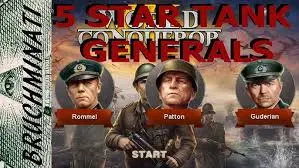
Three great tank commanders of WWII
The World War II was characterized by speed, firepower and mobility such as any other war previously experienced. Armored warfare-and the men who took control of it-was at the very heart of this revolution. Three men stand out of dozens of proficient generals: George S. Patton, Heinz Guderian and Erwin Rommel. The three of them are commonly considered to be the three great tank masters of the WWII, who defined the direction of the battle and redefined the modern warfare.
Even though they opposed each other in other countries and ideologies, Patton, Guderian, and Rommel had a similar belief in maneuver warfare, decisive action, and aggressive leadership. Innovations and performance in the battle fields have continued to impact the military doctrine up to date. three great tank commanders of WWII
This paper will discuss the lives, tactics, and legacies of the three greatest tank generals of WWII, and will discuss what made each one unique- and how they have come to be studied still decades after.
The emergence of Armored Warfare in World War II.
Tanks were commonly considered as a support weapon of the infantry before the World War II. Although the potential of armored warfare had been peaked during the World War I, many armies did not fully embrace the opportunities of armored warfare.
The World War II has turned that around. Tanks had been the lightning rod of attacks, and able to swiftly break through, penetrate and circle. The ability of commanders to learn the importance of speed, coordination, and logistics became more important to achieve success. three great tank commanders of WWII
Patton, Guderian, and Rommel all understood this fact early enough–and had made their careers of knowing how to do it.
Heinz Guderian: The Father of Blitzkrieg.
Trendsetter of Armored Warfare.
German General Heinz Guderian is the so-called intellectual father of the modern armored warfare. Many years prior to World War II, Guderian had proposed that tanks be used in mass and independent units targeting the willing support of motorized forces, artillery, and airpower. three great tank commanders of WWII
His thoughts were the basis of Blitzkrieg, lightning war, the doctrine that focused on speed, surprise, and pressure without completion.

The book Achtung Panzer! by Guderian was one of the most significant military books of the 20 th century.
Guderian and his Victories in Battlefields.
The theories of Guderian were tested by events and failed in the 1939 invasion of Poland and the 1940 invasion of France. He directed Panzer Corps and pushed his armored units so far into enemy-held land that the strongholds were avoided and the command structure of the enemy disrupted. three great tank commanders of WWII
His early penetration into the Ardennes startled the Allied generals and it was the direct cause of the disintegration of France within a span of six weeks.
The imperative to act on his own and move fast often pitted Guderian against superiors who are more cautious–but his performance was self-evident.
Strengths and Limitations
Guderian was a brilliant organizer and strategist, yet a bad politician. His rudeness and numerous conflicts with Adolf Hitler restrained his influence in the long run.
However, his input in the armored warfare makes him one of the three great tank commanders during the WWII. three great tank commanders of WWII
Erwin Rommel: Tactical Genius and Leader in Battle.
From Infantry to Armor
In opposition to Guderian, Erwin Rommel was not a theorist of armored warfare in the first place. His experience was in the infantry, especially mobile and infiltration tactics which he had received during World War I.

But Rommel soon became accustomed to the principles of armored warfare, and put into practice the maneuver principles with a high degree of success–particularly in the deserts of North Africa.
The Desert Fox in Action
Rommel, a commander of Afrika Korps made spectacular victories over British troops, being outnumbered and under-supplied. The speed, deception and mixed arms made him gain the name of the Desert Fox.
Rommel was an easily recognizable leader who often led the frontline, scouting the land and making quick judgments. This and the fact that he could capitalize on the hesitation of the enemy enabled him to win battles that were not supposed to be won on paper. three great tank commanders of WWII
Tactical genius vs Strategic Reality.
Rommel was not a tactical person, but a strategist and a logistical deficient person. His bold gambles frequently led supply lines astray and Axis Casualties of Shipping seriously limited his action.
However, the flexibility and the way he led on the battlefield of Rommel give him a solid standing among three great tank commanders in the world war.
George S. Patton: A Speed, Violence, Person Personified.
A Commander Made to Fight Armored War.
The American General George S. Patton was probably the most violent of the three. Having been a long-time student of warfare, Patton was of the opinion that speed, initiative and unremitting attack were the secrets of victory. three great tank commanders of WWII

Patton was the first Allied commander to realize the power of armored troops to conquer the battlefield unlike many commanders at the early stage of the war.
Patton and His Rise Out of Early Misfortunes.
Patton was introduced to large scale warfare in North Africa where early American defeats made it clear that their training and leadership was faulty. Patton was invited to bring sanity and efficiency. three great tank commanders of WWII
He succeeded spectacularly. The armored forces of the U.S under his command became quick, aggressive and coordinated and could match the Germans panzer divisions.
Breakout Across Europe
The finest performances of Patton occurred following the landings of the Normandy in 1944. Commanding the U.S. In a Fourth Army, commanded by him, one of the fastest movements in the whole history of war was made, through France and into Germany.
The ability to conduct the operational manoeuvres effectively, that is, to move whole armies quickly and flexibly, made him one of the three great tank general of WWII.
How to Compare Leadership Styles.
Guderian: The Theorist
Strategic thinker
Organizational genius
Dwelling upon doctrine and structure.
Rommel: The Battlefield Painter.
Tactical improviser
Led from the front
Excelled under pressure
Patton: Unwearying Attacker.
Aggressive and decisive
Operational maneuver master.
Inspired fear and loyalty
All of the commanders represented various elements of armored warfare perfection.
Tank Doctrine and Innovation.
The three commanders were of opinion:
Speed over static defense
Combined arms cooperation
Action at subordinate levels.
Constant offensive advancement.
They were however applied differently depending on the national doctrine, resources at hand and their temperament.
Patton, Guderian and Rommel formulated an idea of future tank usage together. three great tank commanders of WWII
Impulse on the Contemporary Military Doctrine.
The history of the three great tank commanders of the WWII can be traced much further than 1945. Current armored theory, such as NATO and other militaries in the world, is based on their experience.
Concepts such as:
Mission command
Maneuver warfare
Operational depth
Every one of them is descendants of the teachings of these commanders.
Controversies and Criticism.
All three characters are controversial.
Guderian was a servant of the Nazi regime and he was at odds with Hitler.
The impact of Rommel with the Nazi leadership is disputed.
Patton was hot-tempered, which led to recurrent issues because of his political opinion.
But their main contribution to history is judged by the military effect–and in this respect they have had net effects. three great tank commanders of WWII
Why These Three Are Better than the rest.
Numerous competent tankers existed in the WWII, but Patton, Guderian, and Rommel remain special due to the fact that they:
Changed how wars were fought
Successful performance in the battlefield.
Inspired generations of military philosophers.
They are still known by their names associated with the best in armored warfare.
Lessons of the three great tank commanders of WWII.
Their common experiences can serve as eternal teachings:
Speed creates opportunity
Enterprise is better than fixed orders.
Logistics is as important as tactics.
The results of leadership are the ones that count.
The teachings found in these lessons are still applicable long after they are used in the military. three great tank commanders of WWII
Conclusion
Patton, Guderian and Rommel are three different ways to master armored warfare. Collectively, they make the triumvirate that is being recalled as the three great tank commanders of WWII. three great tank commanders of WWII
Divided by nationality and ideology, they had a vision of warfare, which was motivated by speed, decisiveness and bold leadership. Their legacy formed the face of the contemporary warfare and still marks the way of thinking of the world military.
GIPHY App Key not set. Please check settings